What Are Pillows Made Of? A History of the Pillow, From Stone to Memory Foam
A pillow is one of the oldest sleep aids there is — but what’s inside it has changed almost beyond recognition. Your grandparents slept on feathers and straw. Their grandparents’ grandparents slept on wood, and before that on stone. Today you can pick from memory foam, latex, bamboo and dozens of synthetics.
This guide covers two things: the story of how pillows got here, and — more usefully — what the main materials used today are actually like, so you can choose the right one.
A note on how we’ve written this. We haven’t slept on every pillow in this guide. The history and the material descriptions come from published research and retailer information, and we’ll tell you where each fact comes from. We’re talking about comfort and support, not treatment — if you have real neck pain, that’s a conversation for your GP, not a pillow.
The story: from stone to softness
The earliest pillows weren’t soft at all. The oldest known head-rests come from ancient Mesopotamia and Egypt, and they were solid wood, carved and curved in the middle to hold the head up. They were built for the wealthy and the powerful — a head-rest found in a pharaoh’s tomb is a symbol of status, not a comfort aid.
China took the same idea and ran with it. For more than a thousand years, Chinese dynasties used pillows made from wood, jade, bronze, bamboo and even porcelain — often shaped or decorated with animal designs. These weren’t about softness; they were about keeping the head cool and the hairdo intact, and they were prized possessions.
By early-modern England, things got softer. Ordinary people filled their bedding with whatever was cheap and to hand: feathers, woollen flocks, straw, and a surprisingly soft plant “down” made from the fluffy seed heads of thistles and the bulrush (one cattail stem can hold around 200,000 seeds). Feathers were the luxury option; straw was the everyday one.
The 20th century changed everything. Cheap synthetic fibres arrived, and suddenly a pillow could be light, washable and affordable. That’s the moment the pillow became a mass-market object — and why today the choice is mostly between a handful of very different fills.
How a pillow is actually built
Every pillow is two parts, and it’s worth knowing both:
- The casing — the fabric shell that holds everything. Usually cotton, poly-cotton or a soft microfibre, woven tightly enough to stop the filling working out through the weave.
- The filling — the material inside that gives the pillow its feel, support and temperature.
The casing matters for breathability and how it feels against your skin. The filling decides everything else.
The main materials used today
In the UK, the vast majority of pillows are one of four fills — plus a few specialists.
Hollowfibre / polyester
The everyday all-rounder and the cheapest to make. Light, easy to wash, and unlikely to cause allergic reactions, which is why it’s the default in most hotels. The downside: it tends to flatten and clump over time, so it’s not the longest-lasting.
Feather
Soft and supportive, made from real feathers. It’s a classic for a reason, and it moulds around you nicely. The catch is that it can be noisy, spiky feathers can poke through, and it needs regular plumping.
Down
The fluffy under-feathers of geese or ducks. This is the softest and most luxurious option — and the most expensive. It’s wonderfully light and temperature-regulating, but it gives less head-and-neck support than a firmer fill, so it’s often better for people who sleep on their side or front and just want softness.
Memory foam
The modern one. Memory foam moulds to your head and neck and holds its shape, which is why it’s become the go-to for people who want support rather than sink. The trade-off is that it can feel warm, and a solid foam pillow can sleep hot unless it has a breathable cover.
Specialists: latex, wool, buckwheat, bamboo
Latex is springy and supportive; wool is naturally breathable and temperature-stable; buckwheat is firm and adjustable; and “bamboo” usually refers to a breathable bamboo-viscose cover rather than a bamboo fill. These are more specialist — usually pricier, and each solves a specific problem rather than being a general all-rounder.
A modern combo worth knowing about
Because most pillows are one fill, a “hybrid” — pairing a support foam core with a breathable natural cover — is a smart way to get the best of both.
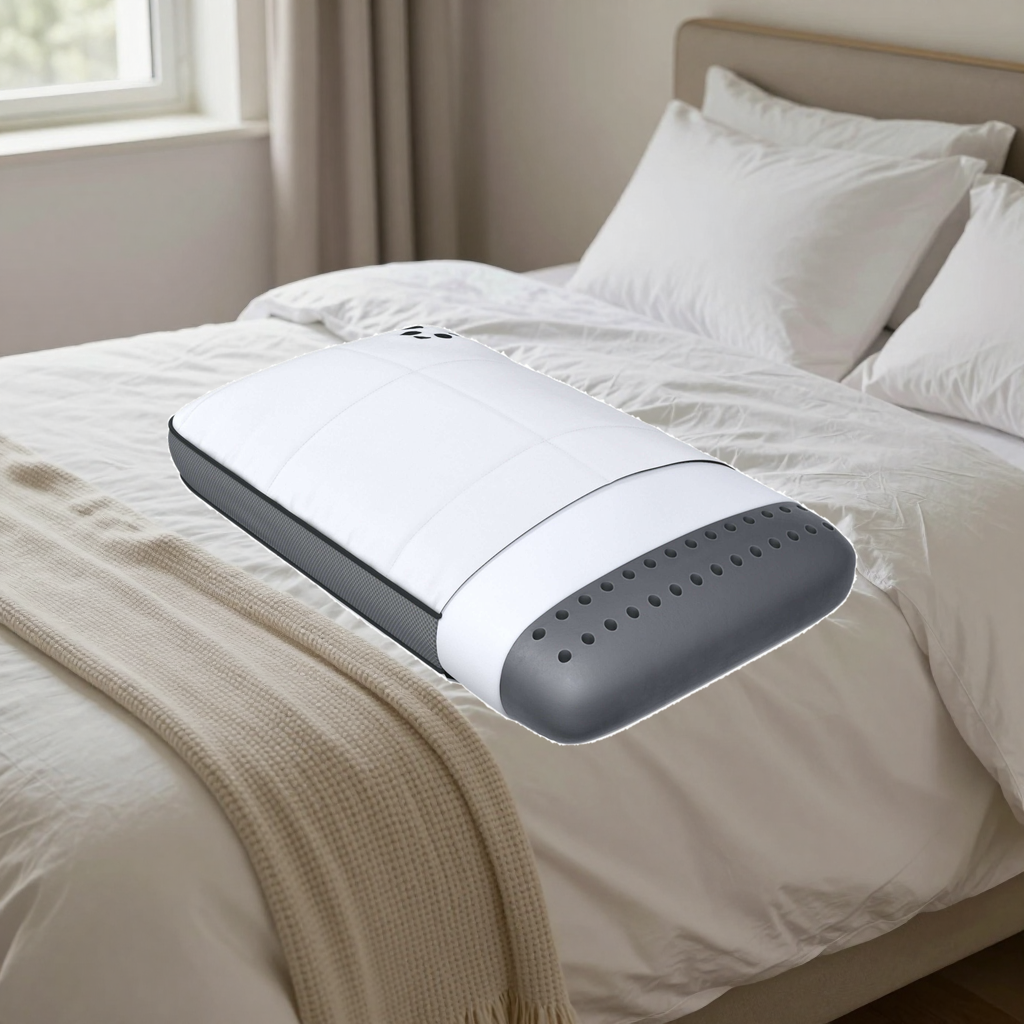
Take the Panda Hybrid Bamboo Pillow we’ve featured before. It’s a bamboo cover over orthopaedic-grade memory foam, roughly 70 x 40 x 13cm, with a 10-year guarantee. In practice, that means the support of foam (good for your neck) with a cover that’s softer and more breathable than a standard foam pillow (good for people who run warm). It’s a nice illustration of how modern pillows combine materials to solve the two problems old ones couldn’t: support and temperature.
Panda Hybrid Bamboo Pillow
How to choose
- If you sleep on your side or back and want support, a memory-foam or foam-core pillow usually works best — see our best pillows for side sleepers.
- If you want softness and don’t mind less support, down or a high-quality feather pillow is lovely.
- If you sleep hot, look for a breathable cover — bamboo or a cooling fabric — rather than a solid foam one.
- If you’re on a budget or want something washable, hollowfibre is the reliable choice.
- If you have neck pain, get proper advice — a pillow can help you be more comfortable, but it’s not a fix. Our how to choose a pillow for neck pain guide has more, and a GP is the right person for persistent pain.